Same Words, Different God: Why Mormonism Is Not Christianity
By Virgil Walker | Sola Veritas

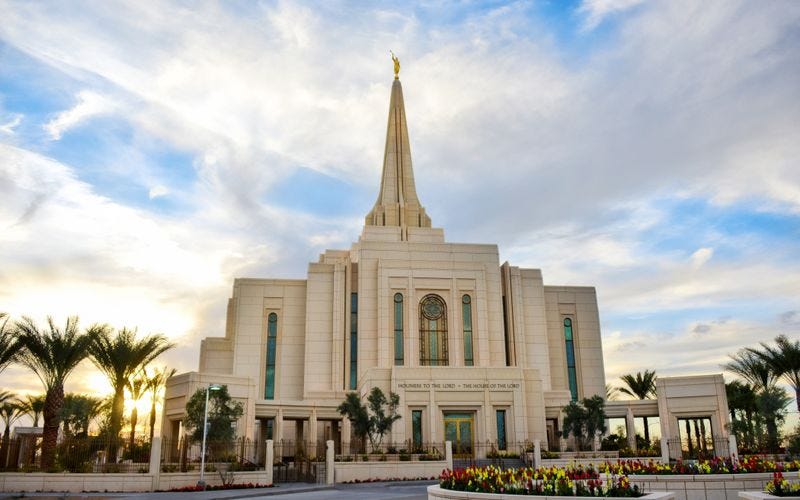
Living in Gilbert means living next door to good neighbors.
You see them at the park after work. Your kids end up on the same teams. You recognize their cars at school drop-off lines and in church parking lots across town. They coach Little League, raise disciplined families, keep their commitments, and take faith seriously. Over time, that shared life does something subtle. It softens edges. It lowers guardrails.
That is why the question usually comes quietly, almost apologetically: They believe in Jesus too, right?
That question doesn’t come from hostility. It comes from proximity. When you share neighborhoods, schools, and routines, familiarity sets in. Over time, familiarity dulls discernment. Shared language creates comfort, and comfort slowly replaces clarity.
That is the danger.
The greatest threat to Christian faith in places like Gilbert is not open opposition. It is assumed agreement.
Mormonism and Christianity often sound similar at first. The vocabulary overlaps. The tone feels familiar. The moral seriousness is undeniable. And so Christians stop asking the most important question altogether.
Do we mean the same thing when we say God?
The Agreement That Isn’t Real
Mormons speak of Jesus and reference the Bible (1 Nephi 13:23–24). They use the language of grace while emphasizing family, discipline, and obedience (2 Nephi 25:23). In everyday conversation, it feels close enough that pressing further can seem unnecessary or even unkind.
But close is not true.
Christianity does not rest on shared values or moral outcomes. It rests on truth claims about God, Christ, and salvation (John 17:3). When those claims are examined carefully, the similarities collapse. The issue is not sincerity; it is definition.
Christianity and Mormonism do not primarily disagree on how to live. They disagree on who God is (Isaiah 43:10–11). Once that difference is established, everything downstream begins to shift.
Christianity is true. Mormonism is false. Not because Mormons are insincere, but because Mormonism teaches a different God, a different Christ, and a different gospel.
God: Creator or Exalted Creature
Christianity begins with God as eternal, uncreated, and self-existent. He is the Creator of all things, dependent on nothing and accountable to no one (Psalm 90:2; Isaiah 44:6; Acts 17:24–25). He does not emerge from history, progress into deity, or share His nature with others (Isaiah 42:8).
Mormon theology teaches something fundamentally different. God the Father was once a man who progressed to godhood, existing within a universe of other gods (Doctrine and Covenants 132:20). He is not eternally unique.
That distinction is not abstract theology. It shapes everything.
If God is not eternally God, then He is not the God revealed in Scripture. Christianity begins with worship, because God alone is holy and uncreated (Revelation 4:11). Mormonism begins with aspiration, because what God is, humanity may one day become. One confesses dependence. The other holds out the possibility of eventual equality.
The Bible knows nothing of a God who became God.
Jesus Christ: Eternal Son or Created Being
Christianity stands or falls on the identity of Jesus Christ.
He is not merely important. He is not a moral guide placed before humanity as an example. He is the eternal Son of God, uncreated, fully divine, and fully human (John 1:1–3, 14; Colossians 2:9). Salvation depends entirely on who He is (Hebrews 7:25).
Mormon theology denies this. Jesus is presented as a created being, a spirit-child of the Father (Doctrine and Covenants 93:21; Moses 4:1–4). He is honored and spoken of reverently, but He is not worshiped as the uncreated Son equal with the Father from all eternity (John 5:18; John 20:28).
This is not a secondary disagreement.
A created Christ cannot save sinners (Psalm 49:7–8). A Jesus who is not eternally God cannot bear divine judgment (Hebrews 1:3). If Christ is not who Scripture says He is, the cross becomes symbolic rather than sufficient (1 Corinthians 15:17).
Christianity does not need a helpful Jesus. It needs a saving one.
Salvation: Finished Work or Lifelong Worthiness
Here, the difference becomes personal.
Christianity proclaims justification by grace alone through faith alone. Salvation is not earned, improved, or completed by human effort (Ephesians 2:8–9; Romans 3:24). Christ’s work is finished (John 19:30), and the believer’s assurance rests entirely on Him (Romans 8:1).
The Book of Mormon teaches something else explicitly:
“For we know that it is by grace that we are saved, after all we can do.” (2 Nephi 25:23)
Those four words change the meaning of grace entirely.
Grace does not save. Grace assists. Grace arrives only after obedience, effort, and worthiness have done their part. Salvation becomes progression rather than rescue (Moroni 10:32). Obedience, ordinances, moral faithfulness, and perseverance determine one’s standing (2 Nephi 31:19–20).
That system cannot give rest.
Anyone who has tried to live under it knows why. There is always more to do, more to prove, and more ground to cover. Christianity frees the sinner by declaring them righteous in Christ (Romans 5:1). Mormonism motivates by keeping the finish line moving.
Grace that waits on human effort is not grace at all (Romans 11:6).
A Legal-Style Contrast: 2 Nephi vs. Romans
Place the two authorities side by side and let them testify.
2 Nephi 25:23 (Book of Mormon)
“For we know that it is by grace that we are saved, after all we can do.”
In this system, grace comes after human effort. Salvation is conditioned on obedience and worthiness, which means assurance is always deferred until the work is complete.
Romans 3:28 (Holy Scripture)
“For we hold that one is justified by faith apart from works of the law.”
Here, grace excludes human effort entirely. Salvation rests on Christ’s finished work alone, with righteousness credited to the sinner by faith (2 Corinthians 5:21) and assurance grounded in what God has already done (1 John 5:13).
Romans 11:6 removes any remaining ambiguity: “But if it is by grace, it is no longer on the basis of works; otherwise grace would no longer be grace.”
Both systems cannot be true. They are not complementary. They are mutually exclusive. The Book of Mormon conditions grace, while Scripture defines grace as a gift given to the ungodly (Romans 4:5).
Christianity is true. Mormonism is false.
Authority: God’s Word or God’s Word Plus
Christianity rests on a closed canon. Scripture alone is God’s final and sufficient revelation (2 Timothy 3:16–17; Jude 3). No prophet can revise it. No institution can override it. Truth does not evolve (Psalm 119:89).
Mormonism requires an open canon. Living prophets possess authority to clarify, reinterpret, and revise doctrine (Doctrine and Covenants 1:38). What was once taught can later be adjusted.
That creates instability.
Truth that changes is not truth. It is authority without finality. When confidence shifts from God’s Word to human offices, assurance quietly erodes (Mark 7:7–9). The Christian faith endures precisely because it cannot be edited (Matthew 24:35).
Why This Matters Here
In places like Gilbert, confusion carries real consequences. Christians hesitate to evangelize because they assume agreement (Romans 10:14–17). Children grow up unable to articulate the gospel clearly (Galatians 1:6–9). Jesus becomes a shared symbol instead of a sufficient Savior.
Confidence fades. Not through attack, but through neglect.
This is not about hostility toward LDS neighbors. Many are sincere, disciplined, and generous people. But sincerity cannot make a false gospel true (Matthew 7:15–16). Love does not remain silent when truth is at stake (Ephesians 4:15).
The Question That Must Be Faced
The questions are unavoidable. Can a gospel that says “by grace after all you can do” ever give peace (Matthew 11:28)? Can salvation conditioned on worthiness ever produce rest (Hebrews 4:9–10)? Can a system that postpones grace until obedience is complete truly be good news?
Those questions cannot be postponed forever.
Christianity does not offer moral improvement or eternal progression. It offers redemption. Christ does not wait for sinners to do all they can. He saves them while they are still helpless (Romans 5:6).
Christ’s work is finished (John 19:30). His Word is sufficient (Psalm 19:7). His grace truly saves (Titus 3:5).
In a place filled with shared language, clarity is not cruelty. It is love.
Join the Mission
Clarity like this is not about winning arguments. It’s about forming convictions.
Christians live in a moment where shared language often hides deep theological differences. In that kind of environment, goodwill is not enough. We need truth, spoken carefully and without compromise. That work requires time, study, and the courage to say hard things plainly.
If this article has helped sharpen your thinking, strengthen your confidence in the gospel, or equip you to speak more faithfully about Christ, consider standing with this mission.
I write here to help Christians think clearly, speak truthfully, and remain anchored in Christ in a confused age. Your support allows that work to continue—deliberately, responsibly, and without chasing approval.
Free keeps you informed.
Support helps sustain the work.
If you want to stand for biblical clarity where it matters most, join the mission.

Thank you for this very helpful analysis of the difference between Mormonism and biblical Christianity. It should be printed out and handed to every Mormon who comes to your front door.
“Over time, familiarity dulls discernment…comfort replaces clarity.”
Wow. Just wow. The pernicious intents of the world, the flesh, and the devil. We must stand firm on the Truth. Thanks for all this, Virgil.