The Verdict I Cheered
What O.J. Simpson taught me about the machine that just misfired on Karmelo Anthony

For five years, I have watched the same machine start up on cue. A name goes viral, a video makes its rounds, a verdict lands, and within the hour, the country sorts itself into the two camps it sorted into the last time, and the time before that. I know the machine because I have felt it move in me. There is a quiet satisfaction in watching your side land a clean punch, and I am not above enjoying it.
So when Karmelo Anthony’s name began trending after his conviction, I braced for the familiar sequence: the hashtags, the marches, the corporate statements, the certainty hardening on every side. Some of it came. Most of it never did, and the engine that turned the whole country over in 2020 coughed once and went quiet.
That silence is worth sitting with, because my own camp is already misreading it. The anti-woke crowd watched the machine stall and started celebrating, certain this was the day wokeness finally died, and sanity walked back through the door. I understand the urge. I also think they are dead wrong, and the reason cuts closer to home than any of us would like to admit.
The high tide
George Floyd was the high-water mark of a certain kind of belief. I am not speaking of policy, though policy followed. I mean a faith. For one summer, the country behaved as though it had found the master key to every locked door, and the key was race. Corporations issued confessions. Campuses reorganized around the new creed, and people who had never prayed in their lives discovered a liturgy and meant every word of it. The crowds were not marching over a single death. They were worshiping. A movement that asks for that kind of devotion is no longer making an argument. It is asking for your soul.
The tide going out
Karmelo Anthony is the tide going out.
When his conviction landed, the same hands reached for the same lever. The familiar voices spoke up, the appeals went out, and the framing arrived on schedule: another black child failed by a hostile system. The lever moved, and the engine did not turn over. No streets filled, and no institution capitulated. The machine misfired because the symbol could not bear the weight laid on it. Floyd could be processed into a clean story. Karmelo Anthony could not. You had a young man convicted of driving a knife into another teenager’s chest, a family that reportedly skipped the sentencing, and an appeal that kept arriving with a donation link attached.
The detail that makes this different from 2020 is where the pushback came from. Not the usual outside critics. It came from inside. A growing number of black Americans looked at the same facts and refused to play along. When even Charleston White publicly walked back his support and called it a money grab, the apparatus lost the one thing it cannot manufacture: the consent of the people it claims to speak for.
The inversion
Look at where the grief actually lived. The people closest to the blood reached for lament, and some reached for mercy. The father of the boy who died spoke of forgiveness, not because he thought the sentence unjust but because he refused to let rage own the rest of his life. The mother said it plainly: for the journalists and the activists, this was a story, and for her family, it was the rest of their lives.
Proximity produced lament. Distance, with nothing real at stake, produced ammunition. The people with the most reason to demand a pound of flesh asked instead for the grace to keep living, while the ones with no skin in the matter turned a buried child into a billboard.
The weight no event can bear
Strip the tribes away and look at what both sides are doing. They are asking one dead boy and one convicted boy to carry the verdict on an entire nation. That is a weight no event can bear, and laying it on two teenagers is its own idolatry. People cannot stop watching because they want to know a true verdict was rendered, and we no longer share a court we trust to render one. A jury spoke, a judge defended it, and an appeal will test them both, yet nothing settles, because the real appeal has moved to the court of public opinion, and that court never adjourns. A society that has surrendered every standard higher than itself is sentenced to relitigate every case forever.
Scripture will not let me hold this loosely. The law God gave Israel did not merely forbid favoring the powerful. It read, “You shall do no injustice in court. You shall not be partial to the poor or defer to the great, but in righteousness shall you judge your neighbor” (Leviticus 19:15). The command cuts both ways at once. “Unequal weights are an abomination to the LORD, and false scales are not good” (Proverbs 20:23). A scale that reads heavy for my tribe and light for yours is false, even when my tribe is the one history wounded.
The scale I carried
I would like to tell you I have always wanted justice more than I wanted my side to win. It is not true.
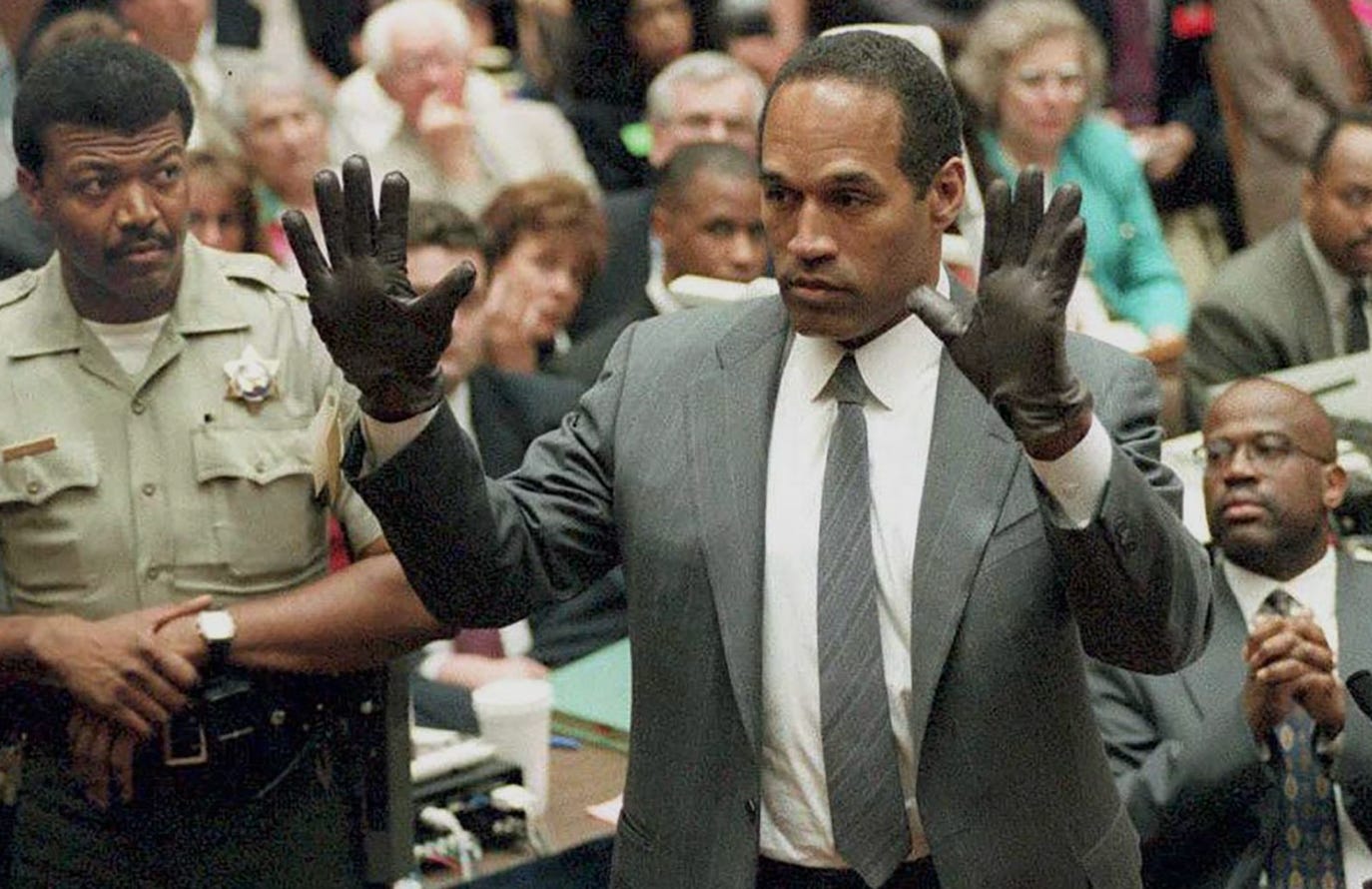
I am old enough to remember the white Bronco crawling down a Los Angeles freeway with O.J. Simpson in the back seat. I remember the names the culture has worked to forget, Nicole Brown Simpson and Ron Goldman. I remember the glove, and the line that turned a double murder into a slogan: if it doesn’t fit, you must acquit. And I remember the verdict that came down that fall: not guilty. The split screens caught everything, black celebration on one side of the country, white disbelief on the other.
To my own shame, I cheered.
Not because I believed Simpson was innocent. I cheered because he won, because somewhere in me I had decided that a black man beating the system was a victory worth having on its own terms, whatever the truth, whoever was in the ground. It took me years to see what that cheer exposed. I had grown so attached to a story of black victimhood that I celebrated a verdict that served no justice and honored no victim. It served an idol, and I had been worshiping it quietly, the same way the crowds worshiped in 2020, the same way some are worshiping now. I have no standing to indict the machine until I admit I once helped run it.
What I am watching for
So no, I do not read Karmelo Anthony as wokeness dying and reason returning. That reading is too clean, and it credits the crowd with a conversion it has not made. Distrust of a lie is not love of the truth. A man can stop believing a con and still want nothing to do with justice.
The danger now is not another riot. It is quieter and worse. It is a culture deciding that because the last verdict was a hustle, every verdict is a hustle, and walking away from the idea that justice can be found at all. That outcome does not arrive with fire. It arrives as a shrug. Exposure is necessary, but it was never sufficient. The tide going out shows you the wreckage on the seabed. It does not rebuild the shore.
What we do with it
Refuse the lever. When the next name trends and the machine fires up, do not let your tribe drag the appeal into the court of public opinion, and do not let the other tribe do it either.
Hold one scale. Weigh it all by a single measure: the killing, the fundraising built on top of it, and the cruelty running back the other way in mocking shirts and dehumanizing branding. A standard that exempts your own side is no standard.
Keep the victim visible. A real boy died, with a father who chose forgiveness over rage, and he is not a prop in anyone’s argument.
Then take the question of final justice to the only court that has never handed down a false verdict. “Shall not the Judge of all the earth do what is just?” (Genesis 18:25). Every case the public never resolves, He will. That is not permission to stop pursuing justice now. It is the only thing that keeps the pursuit from curdling into rage on one end or despair on the other.
The tide is going out. What it leaves behind depends on whether we still remember what we were looking for in the water.
Join the Mission
I publish here regularly at Sola Veritas. If this gave you something to sit with rather than something to react to, that is the point.
The Inner Circle is where the deeper work happens, the honest conversation and slow formation that the noise cannot give you. Free keeps you thinking. Paid takes you deeper. You can join us there, and you can support the work through the store at solaveritas.printful.me.
Writing produced by the author, with limited use of digital tools for editing and clarity.
I did cheer O.J.'s acquittal. Actually threw a party: "O.J. Simpson Liberation Day!"
But there's context.
I was in law school. I watched the case. I was convinced that the prosecution had not made its case. "Beyond a reasonable doubt" is a pretty high bar they did NOT meet, and so though I thought he was probably guilty (and he was), I celebrated that in America, we really would rather ten guilty men go free than one man hang, and the system still worked.
I still feel that way.
Still, I was deeply disturbed by my many black classmates who didn't care anything about that. They were cheering harder for that acquittal than I was, but they didn't care about criminal procedure (despite many of them probably doing better in that class than I did). They just cared that the black guy got off.
In the 1980s we had a blissful absence of racism. It existed but everyone agreed it was wrong, at least in our age group (there were exceptions among the parents for sure). People had taken the "I Have a Dream" speech to heart. It was the overwhelming consensus nationally, but especially among the generation that was born after it. There were still cultural differences, but people actively sought to minimize them and include each other. I once saw a white redneck football player use the N-word (this was middle school!), and five other white redneck football players beat him up right in front of me. It was a really special time.
So the disquieting part about what I saw was the new tribalism. It was different in kind from people grouping up in the lunch room a decade earlier. It was filled with seething and malice and joy of the kind that wasn't "the prosecution didn't do its job, so the system worked" but rather "the black guy got off! We beat the system!"
No, guys. The system worked the way it's supposed to work, so a guilty man walked because we weren't sure "beyond a reasonable doubt" so we weren't willing to take his freedom or his life. The "system" you hate (which King did not, despite pointing out its failings) is exactly what saved the man you obviously believe to be guilty. Why can't you see that?
Rodney King was a turning point of a certain kind. His case was kind of like one in which a prostitute gets raped: the rapist needs to hang, but that doesn't exactly make the victim innocent. Life is full of situations like that. Sometimes everyone involved is wrong, just one person is more wrong. And the rioters were even more wrong than either King or the cops. What lunacy thinks the answer to injustice is to burn down your neighbors' houses and stores? It's a Satanic madness. But at least they were sticking up (in their twisted way) for someone who really did not deserve what he got.
O.J. was different. He should have been acquitted, but not because he didn't deserve death. The part of the system tasked with proving his guilt did a bad job of it, period. But no one actually thought he didn't do it.
Yet they didn't care. Because he was part of their group. So they cheered. Not because the system worked correctly -- it did -- but because the murderer got away with it.
And that was a turning point of an entirely different kind.
Your comment about someone (a journalist) profiting from a story (clicks, attention, financial gain) for a moment while those involved are impacted for a lifetime is a painful commentary on our hearts as a society.
We have exchanged God’s justice in order to worship the idols of the laws and courts of man. Proverbs 17:15 and other verses should guide us, not man’s jurisprudence. Blackstone’s ratio provides a Christian legal understanding that if we were not sure of guilt, we would trust God to carry out justice. Our court system has become a place “legally” impose our will and preferences. Man’s ways are evil and cause great pain.